For decades, commercial security in Singapore relied on a simple equation: more physical assets to protect meant hiring more security guards. But as the landscape of physical and digital threats evolves, that outdated equation is being rewritten.
The Ministry of Home Affairs (MHA) has made its stance clear through the Security Industry Transformation Map (ITM) 2025. With a tightening labor force, rising operational costs, and the heightened complexity of modern security threats, relying strictly on a headcount-based model is no longer sustainable.
To truly protect commercial properties, businesses must transition toward integrated security solutions. Here is why the old model is failing, and how embracing a unified approach of highly-trained manpower and advanced technology is the only way forward.
Currently, more than 49,000 security officers and 250 agencies support the Home Team in protecting the places where we live and work across Singapore. However, the MHA’s Security ITM highlights a critical need to transform the industry to increase productivity and reduce the reliance on intensive manpower.
For facility managers and business owners, the message is clear: deploying a guard at a desk with a paper logbook is a vulnerability, not a defense. Traditional guarding leaves critical blind spots that can only be filled by continuous, automated digital oversight.
To achieve better security outcomes, the MHA recommends four key strategies, heavily emphasizing the adoption of technology and the upskilling of security personnel to operate these advanced systems.
Many organizations attempt to modernize by purchasing new technology—like advanced CCTV or biometric access control—but fail to integrate it with their on-the-ground personnel. When physical security and digital IT infrastructure operate in silos, several risks emerge:
Delayed Response Times: If an access control system flags a breach but doesn’t immediately alert the patrolling officer’s mobile device, critical response minutes are lost.
Inefficient Resource Allocation: Without smart video analytics or centralized monitoring, physical guards are forced to manually patrol low-risk areas instead of focusing on verified threats.
Compliance Gaps: Disconnected systems make auditing, incident reporting, and compliance checks a logistical nightmare.
True protection requires a unified ecosystem. The most secure facilities in Singapore do not view physical guarding and technological infrastructure as two separate line items; they treat them as a single, integrated defense mechanism.
This mandated shift toward integration is the exact foundation of the Focus Group methodology.
By restructuring how security is delivered, we eliminate the blind spots left by traditional models:
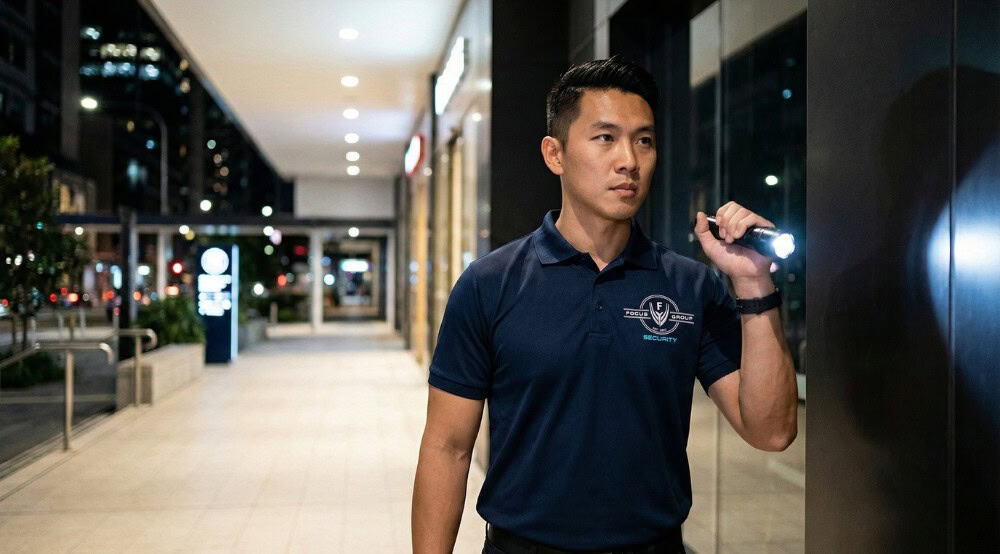
Focus Group Security provides the elite, highly-trained physical presence on the ground. These are the vigilant first responders who manage on-site incidents, conduct physical audits, and ensure strict protocol adherence.
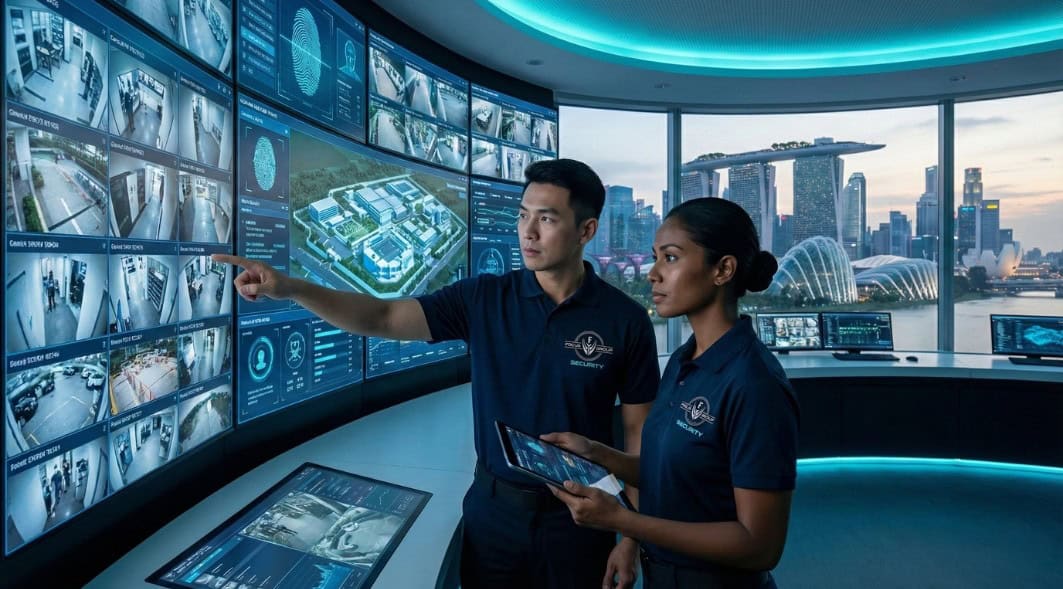
Focus Group Technology provides the digital brains behind the operation. This includes designing, deploying, and maintaining the smart access controls, cybersecurity protocols, and automated surveillance networks that empower the guards.
When these two divisions work seamlessly together under one overarching strategy, your security officers are no longer just static observers; they become highly productive, tech-enabled incident responders.
The MHA has drawn the roadmap for 2025 and beyond. Businesses that fail to transition away from headcount-heavy contracts will face higher costs and greater vulnerabilities in the coming years.
Upgrading your site’s security is no longer just about compliance; it is about operational resilience.
Are your physical and digital defenses operating as a unified front? Contact Us Today to explore how our specialized sub-divisions can tailor an integrated security and technology solution for your commercial property.
Focus Security Services