Event management organisers handle talent booking, vendor management, ticket distribution, and marketing logistics. Amidst these responsibilities, safety remains a pillar of a successful event.
Without a safety plan, any gathering can quickly run into mishaps or, worse, endanger your loyal customers’ safety and result in public backlash.
Specialised event security companies provide the infrastructure required to prevent these outcomes.
As such, organisers should arrange event security services to ensure a smooth, safe, and successful event.
Key Takeaways
- Event security ensures attendee safety and the uninterrupted flow of the event, ensuring attendees enjoy the program.
- Event security involves a detailed site analysis to identify trip hazards, entry bottlenecks, and high-traffic hazard zones, allowing organisers to optimise these areas.
- Effective crowd management means controlling the flow of people to help prevent dangerous density levels and stampedes.
- Modern security integration includes density mapping and facial recognition to replace slow, manual entry processes.
- Comprehensive safety planning requires a unified command centre and protocols to mitigate emergency responses.
The Importance of Security at Events
The primary benefit of event security is keeping attendants safe.
Event attendees are among your most loyal customers—those willing to set aside time to engage with your brand-curated activities. As such, they should have a memorable experience, not be harmed or maimed as a result of their attendance.
Also, social media allows incidents to be broadcast globally in real time. An event mishap that results in guest injuries can damage a company’s reputation. Preventing a PR crisis is better than fixing one.
Furthermore, there’s also compliance to worry about. Local authorities require adherence to safety protocols for public assemblies. Failing to provide adequate security can result in immediate shutdown by police or fire marshals.
With these benefits, event security becomes invaluable. They’re much less of a headache (and more affordable, too) than dealing with injury and property damage liabilities, and the emerging public backlash arising from a security breach.
What Are Event Security Companies
Event security companies are organisations that manage risk and maintain order at various event gatherings, both public and private.
They render security for event organisers for the benefit of the event.
These firms differ from standard guarding services because their personnel receive focused training in crowd dynamics, conflict de-escalation, emergency response, and event-specific protocols.
An event security firm provides trained personnel and technology as part of its service.
Their role is to identify vulnerabilities and execute contingency plans when incidents occur. They operate as an extension of the event management team, focusing specifically on risk reduction.
How Do Event Security Companies Work with Event Organisers
Event organisers cooperate with security companies through the following processes.
Site Analysis
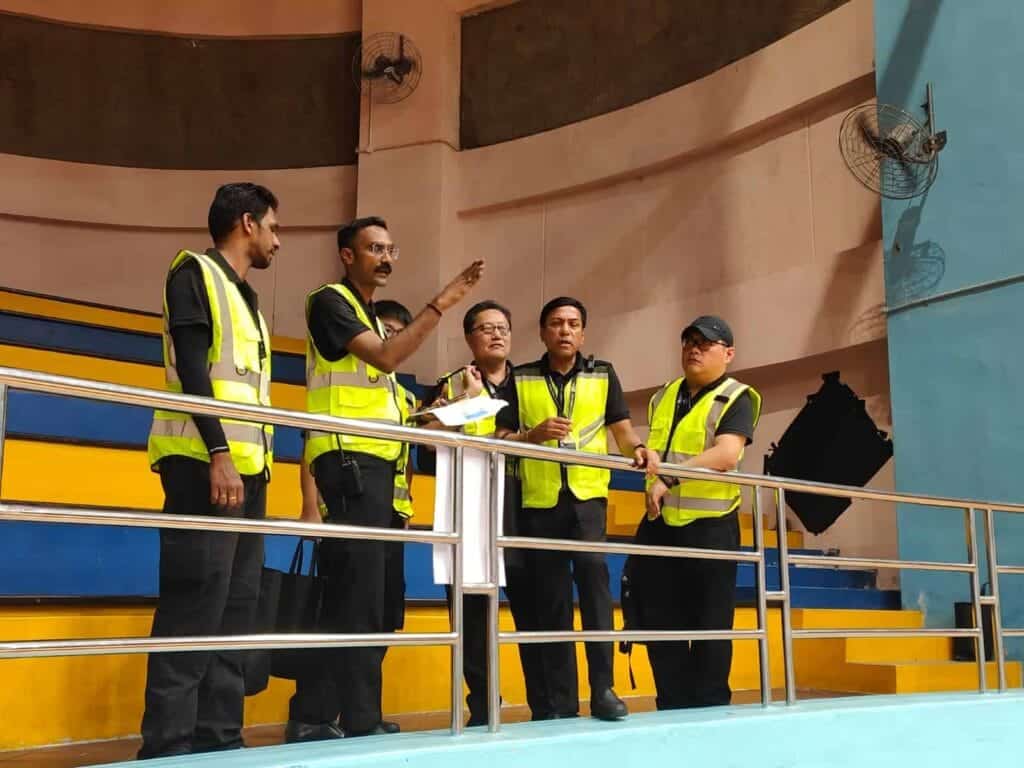
The partnership begins with a comprehensive physical assessment of the venue. Security conducts a walkthrough with the organisers to map the layout and identify operational challenges.
During this analysis, security companies evaluate several critical factors:
- Ingress and Egress Points: They determine whether the entrances can handle the expected arrival rate and whether the exit routes are sufficient for a mass evacuation.
- Blind Spots: They identify areas without visibility, which can be hotspots for malicious intent.
- Hazard Zones: They identify areas prone to congestion, such as narrow corridors, as well as high-traffic areas, such as bar areas.
- Perimeter Integrity: They inspect fences, gates, and loading docks to ensure unauthorised individuals cannot bypass the main entry points.
Risk Mitigation

The security firm helps event companies identify the most likely risks and plan accordingly. Items they assess include:
- The identified threat: Examples include crowd surges or weather emergencies.
- The probability of occurrence: Assessed as low, medium, or high.
- The potential impact: Measuring the severity of the consequences.
- The mitigation strategy: The specific action taken to reduce the risk, such as adding security staff to certain zones.
By assessing the probability and impact of various threats the event may face, event security companies prepare for the most probable and most detrimental threats.
It’s worth noting, however, that an event security firm’s specialisation still lies in security and threat management rather than accidental hazards.
Emergency Response Planning
Using data from their risk analysis, the safety firm and the organisers establish standard operating procedures for the most likely emergencies.
Key elements of this planning phase include:
- The Command Centre: Establishing a central hub where decision-makers from security, management, and medical teams sit together to coordinate operations.
- Chain of Command: Defining exactly who has the ultimate authority to stop the show or order a full evacuation.
- Emergency Lanes: Mapping out clear routes for emergency services that must remain unobstructed.
- Communication Protocols: Establishing radio channels and code words to ensure clear, prompt communication among staff members.
Crowd Management

Security firms work with organisers to design the flow of human traffic across the entire venue for a smooth flow.
This process involves:
- Grid Systems: Breaking the venue down into manageable zones, each with its own dedicated safety supervisor.
- Rate Control: Managing the speed at which people pass through ticket scanners and bag check areas. This might involve adding physical barriers or additional stationed staff.
- Queue Design: Using snake lines and barriers to organise waiting areas and prevent line-cutting. It also optimises space.
- Egress Planning: Directing guest departures to prevent massive parking lot bottlenecks.
Proper crowd management reduces the likelihood of stampedes, ensuring that attendees can enter and exit the venue effortlessly.
VIP Protection
Many gatherings feature high-profile guests, speakers, or performers who require dedicated protection. Security companies provide protection for these individuals during the event.
This coordination includes:
- Route Planning: Mapping out secure arrival and departure paths that avoid public concourses.
- Green Room Security: Stationing guards at the doors of private holding areas.
- Close Protection Details: Assigning bodyguards to shadow the VIPs during their time at the venue.
- Advance Work: Inspecting the areas where the VIP will stand, speak, or perform before they arrive.
AI Traffic Analytics
The integration of artificial intelligence has changed how safety teams monitor large crowds. Protection firms now deploy intelligent video systems to help manage flow and seamlessly profile those entering the venue.
Organisers benefit from this technology in several ways:
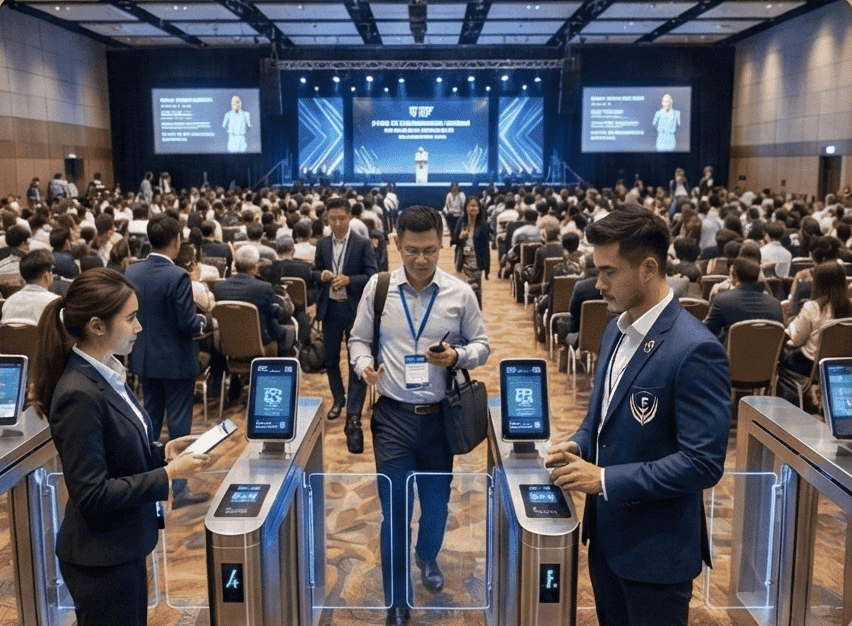
- Facial Recognition: Cameras help organisers and security personnel identify who is entering and leaving the event. That way, there is better oversight of attendees’ profiles, rather than a manual logbook.
- Density Mapping: Cameras automatically calculate the number of people per square meter in specific zones. This allows a glance into which areas are overcrowded, prompting security personnel to disperse overly dense areas.
- Threshold Alerts: The system sends an automated alert to the command centre if density levels exceed safe operational limits.
- Digital Counting: Tech solutions enable event security companies to digitally track attendees, eliminating the need for manual clickers.
Potential Event Security and Safety Hazards to Watch Out For
To maintain a secure environment, management teams and their safety partners must actively monitor for event hazards.
The usual event hazards fall into the following categories:
Crowd Safety
Crowd-related hazards are among the most severe at any high-occupancy operation.
When large numbers of people gather in a given space, the following threats could occur:
- Hostile Attendee: A malicious individual can cause significant harm at an event where many people gather.
- As such, it’s imperative that security personnel check for hazardous items at the gates.
- Should one slip through the cracks, security should be positioned for rapid deployment.
- Stampedes: When the crowd panics or rushes toward something, the stampede can crush those who are toppled.
- Security companies assist event organisers in planning walkways that optimise the flow of people, reducing the risk of individuals being crushed.
- Security companies also assist in managing and de-escalating crowds to prevent panicked stampedes.
Trip & Fall Hazards
Slips, trips, and falls are some of the most frequent sources of injury at public gatherings. Mitigating trip & fall hazards includes:
- Cable Management: Power and data lines required for sound and lighting systems must be covered with heavy-duty rubber ramps.
- Surface Changes: Transition points between grass, gravel, and concrete must be clearly marked and monitored, especially in wet conditions.
- Anti-Slip Mats: Flooring can become slippery when rain comes. Slip mats should be on standby in case it rains at the event.
Trip-and-fall hazards aren’t a primary focus for security companies. However, they can assist in blocking off areas where attendees can fall off and provide first aid to those who may have sustained injuries from tripping.
Fire Hazards
Fire presents a catastrophic risk, particularly in indoor venues or operations using temporary power grids.
Be vigilant around the following items:
- Pyrotechnics: Special effects involving fire or sparks require dedicated fire watch personnel.
- Electrical Distribution: Overloaded circuits or damaged cables can easily spark and ignite nearby materials.
- Prohibited Items: Event organisers should clearly communicate items that attendees are prohibited from bringing into the venue. These can include lighters, aerosol cans, and alcohol. Organisers can coordinate with event security companies to monitor for these items during bag checks.
- Exit Obstructions: Decor, staging equipment, or vendor stalls must never block designated fire exits or fire extinguisher stations.
Types of Events That Need Event Security Companies

Different types of gatherings present distinct operational challenges.
Security deployment plans must be customised based on these profiles.
- Music Festivals and Concerts: These involve high-density crowds and prolonged exposure to weather elements. They require intensive perimeter control to prevent gate-crashing, barriers at stage entrances, and active substance control measures at entry points.
- Corporate Conferences and Trade Shows: These host business professionals and display high-value technology. They require event security services to protect their assets.
- Sporting Events: These involve large, passionate crowds. They require separation strategies to keep rival fan groups apart, alcohol management policies, and rapid-response security personnel to stop fights.
- Community Fairs and Outdoor Exhibitions: These are sprawling layouts with multiple unguarded access points. They require mobile patrol units on foot or by bicycle and protocols for lost children (we get a lot of them at these types of events).
- Private VIP Galas: These are high-security events that host public figures and wealthy individuals. They require non-uniformed personnel for discreet monitoring, enforcement of guest lists, and close coordination with personal protection details.
Get Guest-Centred Security for Your Event Today
As crucial as safety is for any event, the goal remains to entertain attendees and ensure a lively atmosphere.
Here at Focus Security, our security protocols are seamless, not intrusive. As such, our personnel are trained in hospitality, in addition to the standard threat detection expected of event security.
We also blend in with the look of your event. For black-tie weddings, we wear suits. If you’re hosting an outdoor picnic or corporate team-building event, we wear polos.
Focus Security also has the technological capabilities required to monitor your attendees, so that event-goers aren’t stopped by logbooks and manual checks.
You’ll maintain the fun and excitement of your event without compromising on security! Consult with Focus Security today to develop a customised protection plan for your event.
Frequently Asked Questions
Does event security include specialised first aid or medical support?
While their primary role is protection, many event security officers are dual-trained as first responders to provide immediate CPR or AED support until professional paramedics arrive on-site.
Are security officers permitted to use physical force to remove a disruptive guest?
Personnel are first trained in Passive Intervention and Verbal De-escalation; physical removal is used only as a last resort to ensure the safety of other attendees.
What insurance coverage should an event security company carry?
A reputable firm should hold comprehensive Public Liability and Professional Indemnity insurance to protect the organiser from claims arising from security-related incidents or negligence.
Does a security company provide temporary fencing and physical barriers?
While some firms own their own crowd control stations and infrastructure, others work with specialised rental partners. These physical assets are deployed based on the site analysis.